


Fraud prevention desk · Open now
Do the job of a fraud analyst.
Realistic orders. Open the evidence. Make the call.
Checked on your decision and your reason.
Free. No sign-up to start. We ask for your email only when you close the ticket, to keep your score. 20 minutes.
Learn on the job
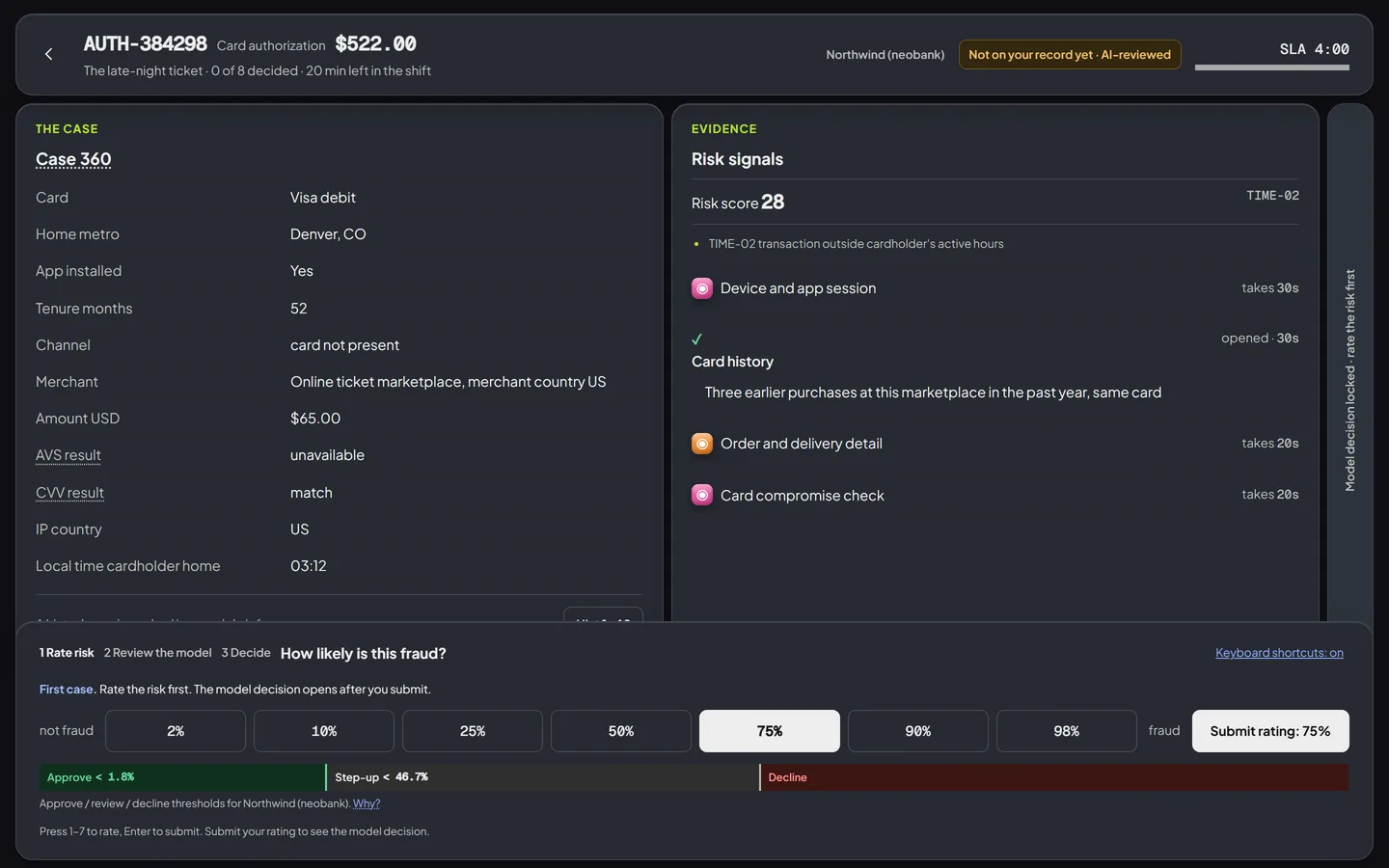
Learn on the job with fraud cases built from how the work runs.
Work customer orders the way a fraud team works them.
Read the signals on the card and the account. Judge what the AI flags. Decide: approve it, hold it, or decline it.
Close the case and get checked on the free ticket's five core checks.
Your score goes on your Shift Record, the record an employer can check.
Work your free caseFree tool: read the first digits of a card with the BIN lookup.
What you do
The work, the way a fraud prevention team does it.
For fraud analyst, fraud investigator and disputes roles.
- Card payments and orders, in a live queue.
- Open the evidence. Approve, check or decline.
- Make your call first. Then judge the AI trained for this work's.

A shift
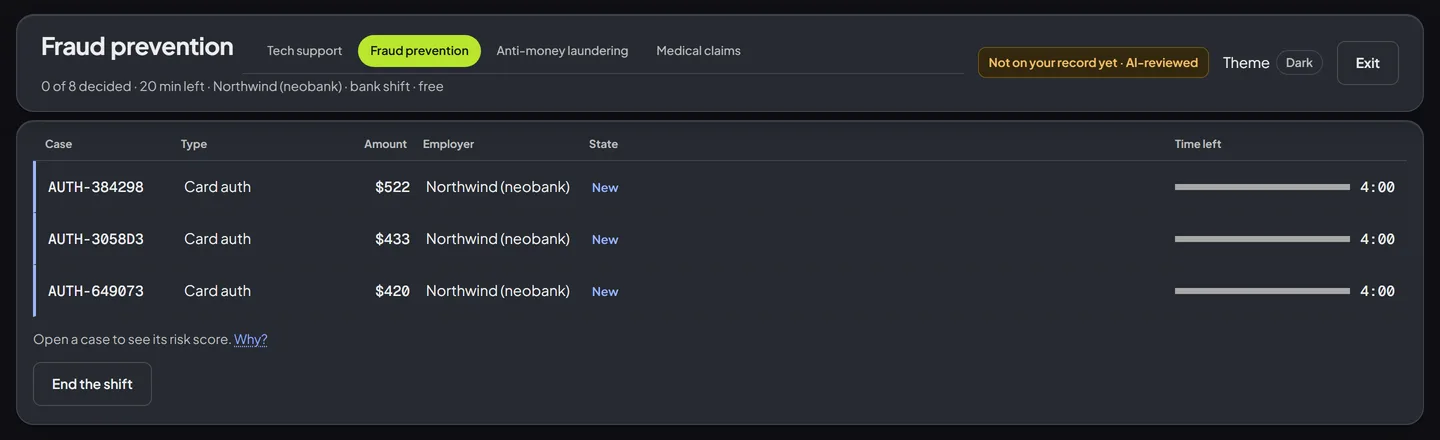
How a shift runs.
- 01
The queue opens
Orders and payments arrive with a clock. The evidence is inside each one.
- 02
You decide
Approve it, check with the customer or decline it, and say how sure you are.
- 03
You are checked
On whether your call fits the evidence, what a mistake would cost, and your reason.
The grading
What you are checked on: 5 parts.
- Whether your decision fits the evidence you saw
- Whether you checked the evidence worth checking
- How well your confidence matched the evidence
- What a wrong call would have cost the business
- The reason you wrote down
Each checked fraud shift adds to your Shift Record. Only work scored from the checklist counts toward it.
82out of 100 overall
- Decision fits the evidence90 out of 100
- Evidence checked80 out of 100
- Confidence match70 out of 100
- Cost of a wrong call80 out of 100
- Reason written down90 out of 100
Every score opens to the note behind it. Disagree with one? Dispute it.
All 5 parts shown.
Ways in
Start free. See the plans when you want more.
One plan opens the desk you choose. One free ticket per account, checked against the core checks.
Where it leads
Real fraud work. A career that pays.
Every bank, card issuer and online store needs people who can stop fraud. Here is the work, and where it leads.
US average pay for this job
$61,385
a year, Fraud Analyst
Grow to
$137,500
a year, Fraud Program Senior Manager
Sources: Payscale, Fraud Analyst, US average base, 2026; Salary.com, Fraud Program Senior Manager, US average, Oct 2026.
The work, and the job it matches
Review alerts on card and account activity.
Fraud analysts work an alert queue all day.
Read the customer's history, then block, release or escalate.
That call, made fast and made right, is the job.
Write the note behind every decision.
Decisions get audited, so the note behind each call matters too.
What your record gets you
- Every graded shift lands on one link you can share.
- Put it under Projects on your résumé. It is real work, scored part by part on that desk's rubric.
- With your consent, an employer can open the work behind any score.
- New cases keep coming, so you stay sharp on the work as it changes.
Work your free case, then work full fraud shifts on the plan.
Work your free caseThe other desks
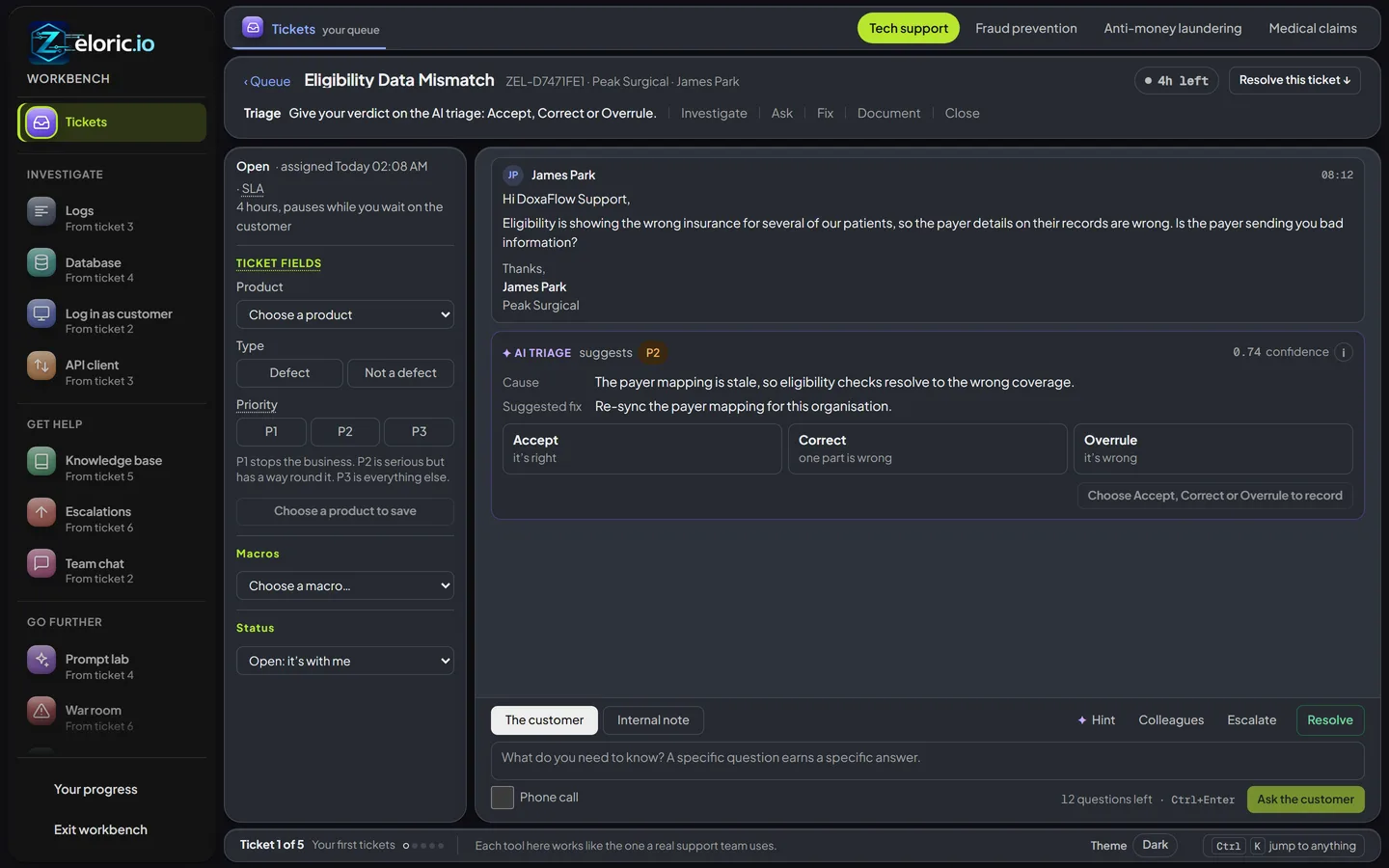
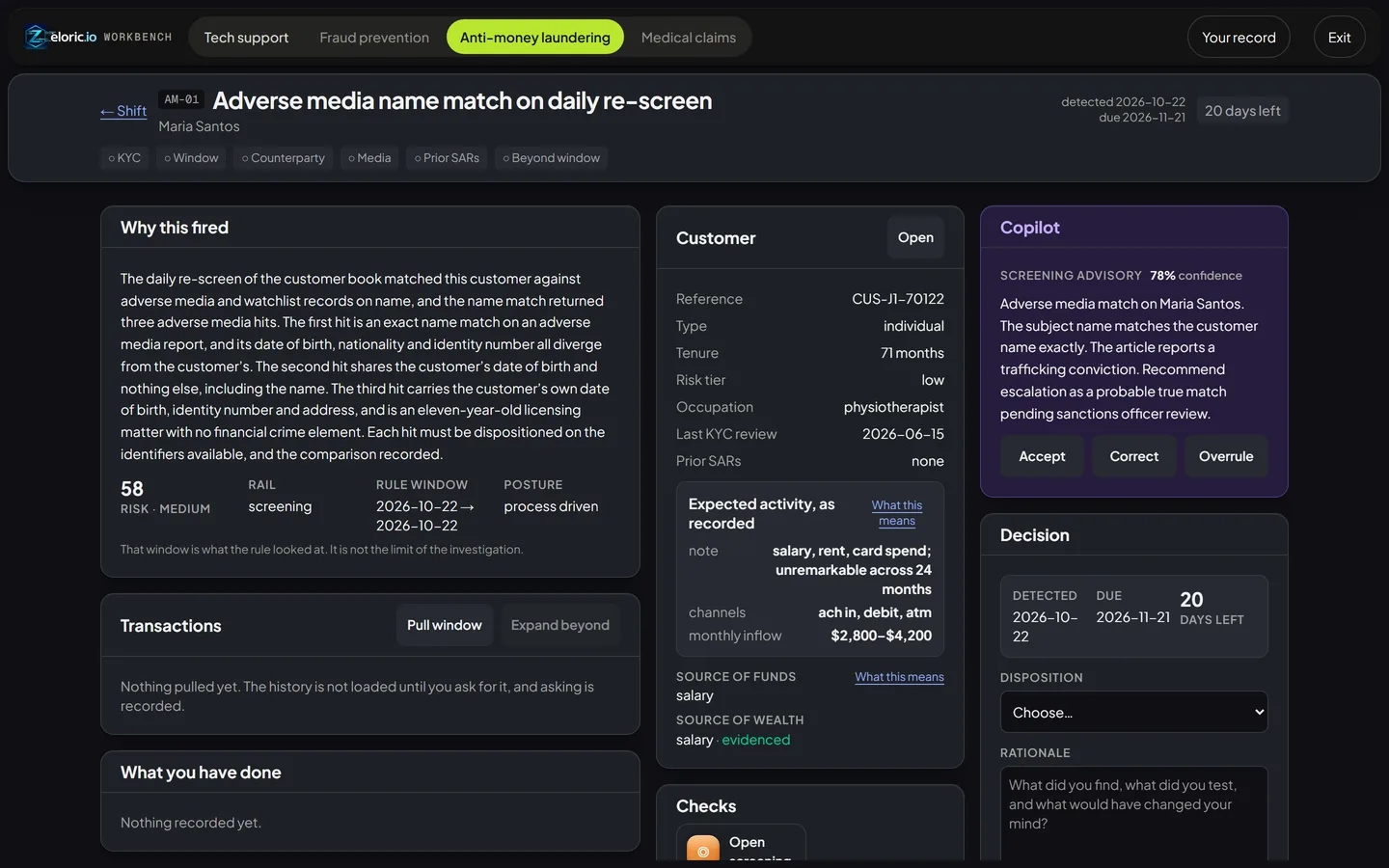
Try another job.
Guides
How the Fraud prevention desk is judged
Free. No sign-up to start. We ask for your email only when you close the ticket, to keep your score.
Start on the fraud prevention desk.
One realistic ticket, checked on the free ticket's five core checks. It goes on the record an employer can check.